
Choosing a new gel polish line for your salon means balancing client comfort, finish quality, and workflow speed. No-HEMA gel polish lines promise reduced allergenic risks while aiming to keep the performance technicians expect. This guide breaks down what to look for, how to use these colors efficiently, and when to buy full sets versus individual shades.
What “No-HEMA” means for your salon
HEMA is an ingredient in many traditional gel formulas that can trigger sensitivities in some clients and technicians. A No-HEMA gel polish removes that particular component to reduce the likelihood of allergic reactions and occupational exposure. The main advantages reported by manufacturers include gentler formulas and comparable performance to conventional gels, but always evaluate for your clientele before switching products wholesale.
Key features to check on the bottle
- Size and viscosity: These gels come in 15ml bottles with a thick base that helps cover the nail plate easily.
- Pigmentation: High pigmentation reduces the number of coats required for full coverage—handy for high-volume services.
- Durability claims: Formulations are marketed as resistant to chips and cracks; follow manufacturer application steps to achieve best results.
- Curing: Typical curing time is 60s–120s under UV/LED lamps—confirm with your lamp and test one shade before using in a client service.
Shade options and stocking strategy
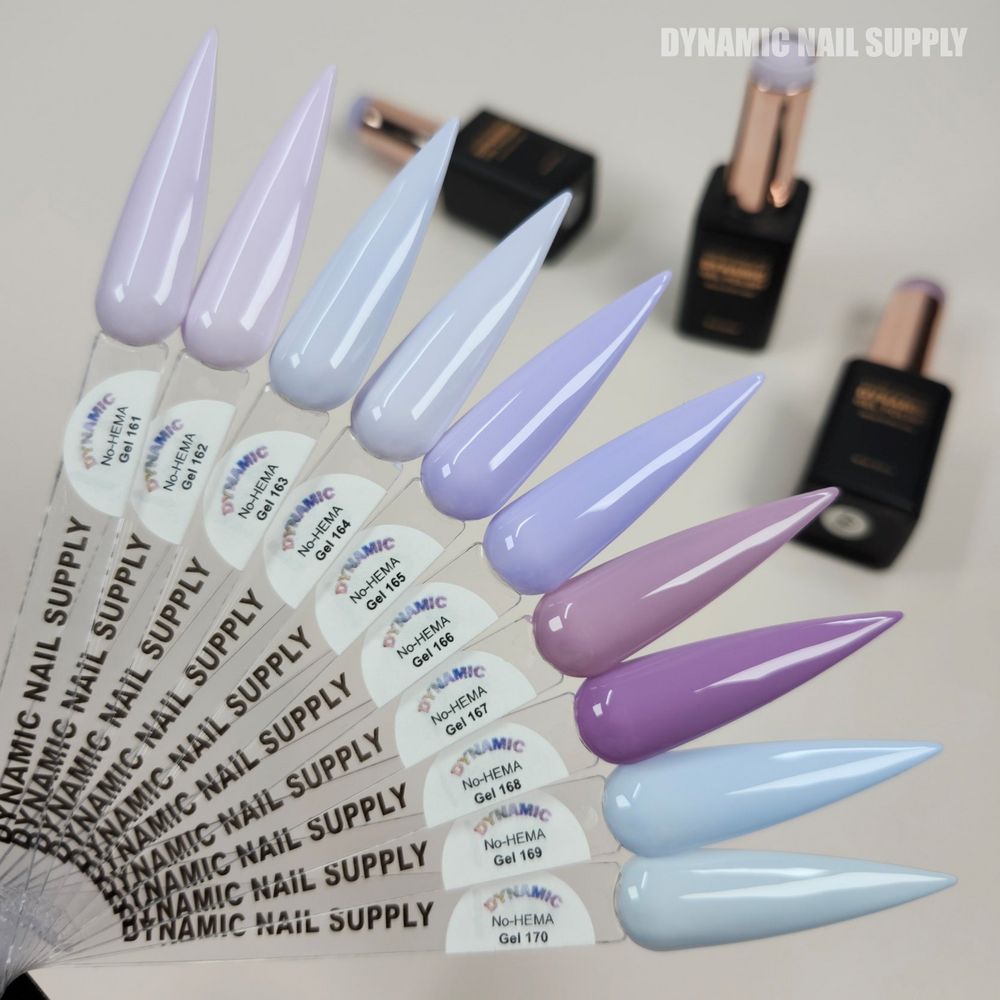
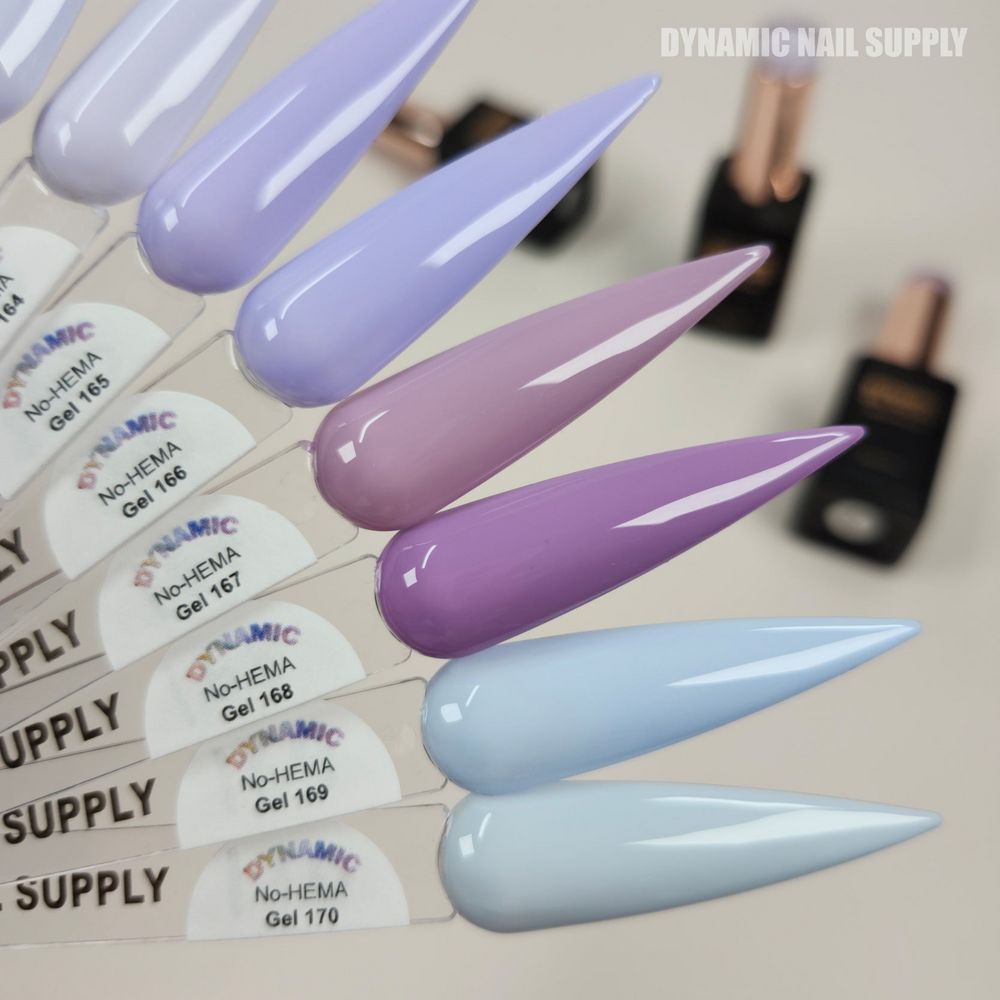
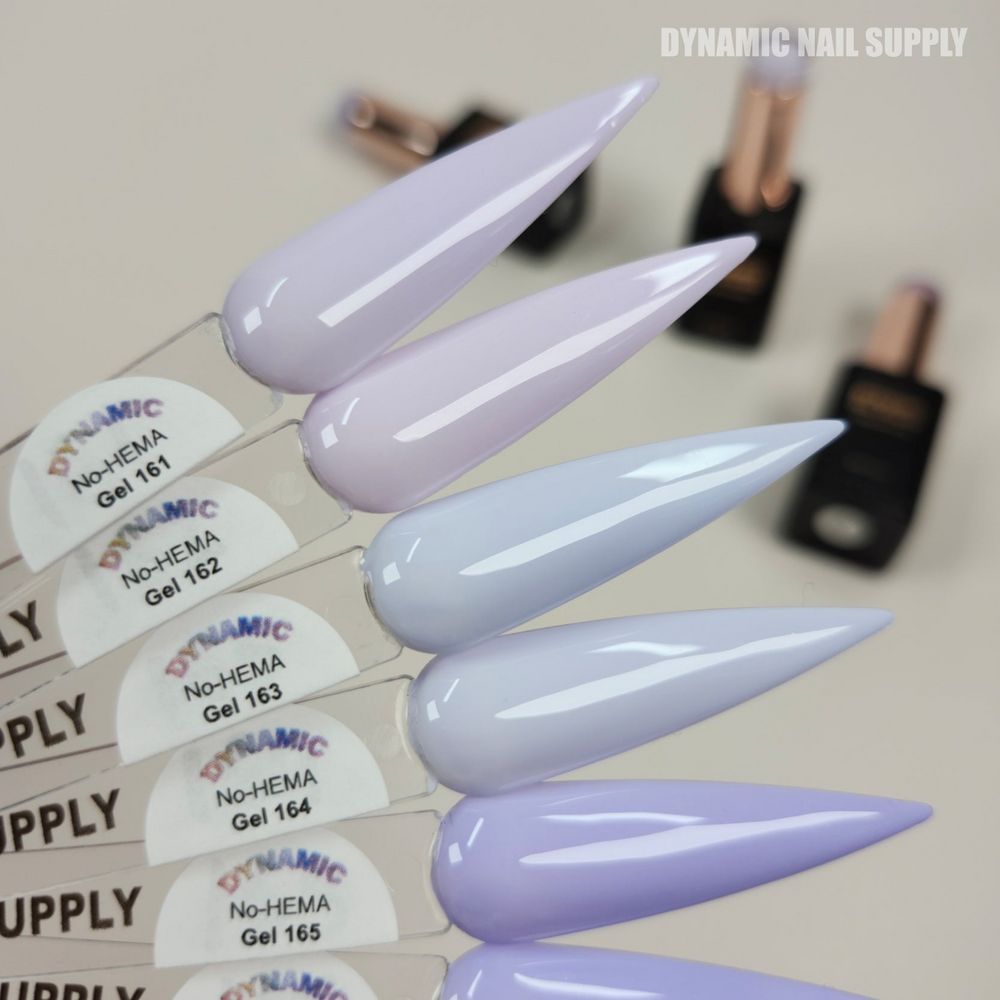
The line includes ten shades identified as No-HEMA Gel 161 through No-HEMA Gel 170, spanning pastel blues, violets, and spring-leaning tones. Salons often choose a mix of core wearable hues plus accent shades for seasonal looks. For efficient restocking and client testing, consider the vendor’s multi-buy options; for example, some suppliers offer the full set of 10 colors for a single purchase.
For quick ordering, check the product page for single shades or the whole set: No-HEMA gel polish.
Application workflow: practical tips for techs
- Prep the natural nail: Remove shine, cleanse oils, and apply a thin, even base layer when required by your protocol.
- Thin coats, not thick puddles: Despite a thicker base formula, aim for two thin coats for smooth pigment distribution—this prevents uneven curing.
- Cure by your lamp: Use the recommended 60s–120s curing window as a guide; lamp output and shade opacity affect cure times.
- Finish reliably: If the system includes a top coat, follow the manufacturer’s finishing steps to lock in shine and longevity.
Who benefits most from switching to No-HEMA gels?
- Clients with sensitivities: People with known reactions to HEMA may tolerate No-HEMA options better.
- High-volume salons: Lines with high pigmentation and easy coverage cut service time when used correctly.
- Technicians concerned about exposure: Removing HEMA from the daily product mix reduces one source of potential allergen contact.
Buying tips: single shades vs. full set
Decide based on clientele and service menu. If you regularly offer seasonal or trend colors, buying the full set can be a convenient way to expand options quickly. If you prefer to trial products, order individual shades first to test cure compatibility and wear on your clients. Prices for this product line range from $8 to $80, and may change, so factor shipping and reorder frequency into your per-service cost calculations.
Care, storage, and safety notes
- Store upright: Keep bottles upright in a cool, dark place to preserve viscosity and reduce skin contact risk.
- Minimize skin contact: Avoid getting polish on skin during application to lower chances of irritation—use clean-up tools rather than pushing product onto cuticle area.
- Ventilation and PPE: Good salon ventilation and sensible PPE reduce overall exposure to fumes and dust during treatments.
- Patch test when unsure: If a client has a history of product sensitivities, perform a controlled patch test before a full service.
Final checklist before adding No-HEMA gel polish to your station
- Confirm lamp compatibility and perform a full-cure test on a sample nail.
- Start with 1–2 popular shades to gauge client reactions and wear before committing to a full set.
- Train staff on thin-coat application and cleanup to maximize performance from a thick-base formula.
- Track service times and reorders to determine whether individual purchasing or full-set buys deliver better margins.
When chosen and used correctly, a No-HEMA gel polish line can expand your salon’s offerings while addressing client and technician sensitivities. If you want to explore these shades as a convenient starter option, the range sold by Dynamic Nail Supply includes ten coordinating pastel and spring tones labeled 161–170, and many salons find a small test run the best way to evaluate fit for their menu.