
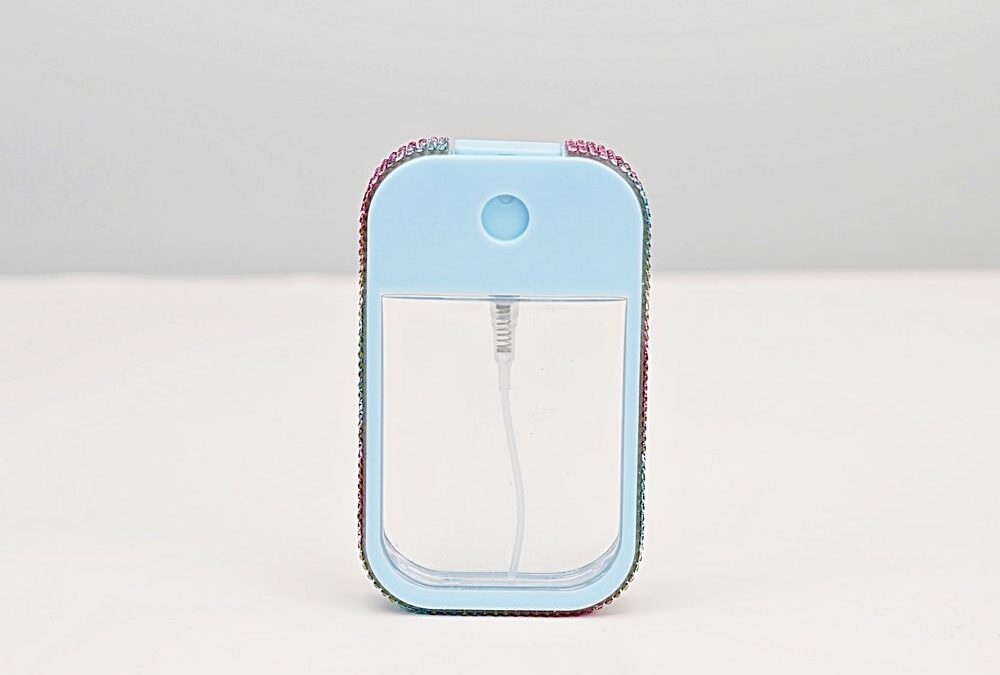
Myth busted: rhinestones don’t make a bottle disposable. A trimmed, baby-blue card spray bottle can be cleaned, sanitized and reused safely between clients if you follow the right steps. You just need a routine that protects the clear window, the tiny gems and the internal spray mechanism.
Prep: empty and inspect
Work in a well-lit area. Empty the bottle completely of any product and rinse the reservoir with warm water until it runs clear. Inspect these points closely:
- Clear front window: look for residue or clouding along the visible reservoir.
- Rhinestone trim: check for loose or missing gems and any adhesive buildup.
- Nozzle and cap: test that the spray head actuates and the internal tube is intact.
Step-by-step cleaning routine
- Rinse: fill with warm (not hot) water, shake, spray once to flush the nozzle, then discard water.
- Soak internal parts: mix a 70% isopropyl alcohol solution (salon standard) with water in a small cup; remove the spray head and submerge the tube and nozzle tip for 2–3 minutes to dissolve residue. (Do not soak glued rhinestone trim.)
- Clean the exterior: dampen a lint-free cloth with isopropyl alcohol and gently wipe the plastic body, rhinestone trim and clear window. Use gentle lateral strokes so you don’t lift any gems.
- Nozzle flush: reassemble the spray head, fill the reservoir halfway with the same alcohol solution, and spray repeatedly until the mist runs clear—this clears the internal tube.
- Final rinse: empty the alcohol, rinse once with sterile or filtered water, and spray to clear any remaining traces.
- Dry: air-dry fully with the cap removed. Use a clean paper towel to pat the rhinestone edges if needed; avoid rubbing the adhesive line.
Nozzle care: keep the mist reliable
- Monthly deep clean for heavy use: remove the head and use a thin cotton swab dipped in alcohol to clean the nozzle orifice and the stem.
- Quick clinic fix: if mist sputters, soak the nozzle tip in warm soapy water for a minute, then flush with alcohol.
- Replacement: keep spare spray heads on hand; a worn or blocked nozzle is often cheaper to replace than to repair in-service.
Do’s: protect the finish and hygiene
- Do use 60–70% isopropyl alcohol for internal sanitizing; it’s effective and evaporates cleanly.
- Do clean between clients; even with clear liquid, microscopic buildup forms at the nozzle and inner walls.
- Do store upright and capped to prevent dust collecting around the rhinestone trim and nozzle.
- Do replace the bottle if adhesive fails or the clear window becomes permanently clouded.
Treat the Blue Rhinestone spray bottle as a client-facing tool and include Blue Rhinestone spray bottle in your station rotation to keep it ready.
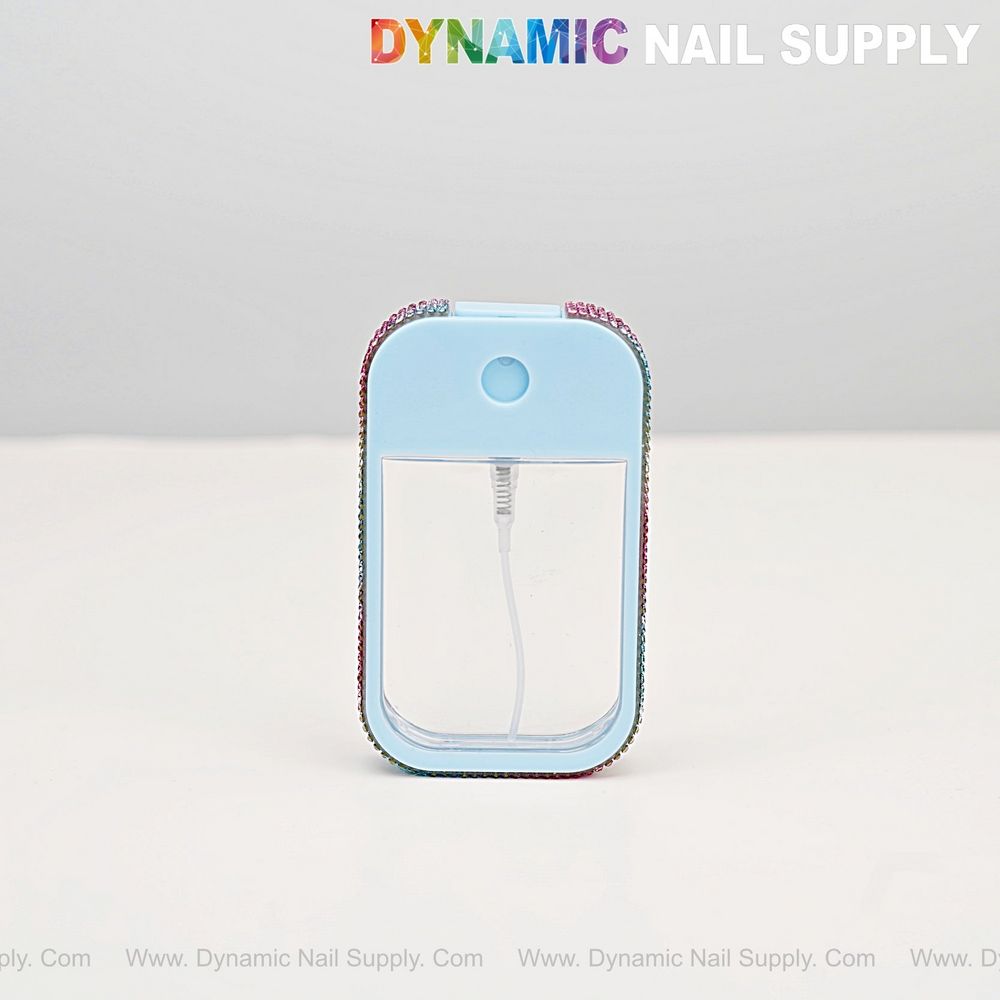
Compact baby-blue card spray bottle with clear window and rhinestones
Don’ts: avoid damage
- Don’t soak the entire bottle in solvents—rhinestone adhesive and plated trims can weaken with prolonged immersion.
- Don’t use abrasive pads or high-abrasive cleaners on the clear window; they scratch and reduce visibility of the internal tube.
- Don’t pour undiluted corrosive cleaners or hydrogen peroxide into the reservoir—these can cloud plastic and affect rhinestone glue.
- Don’t autoclave or expose the bottle to high heat; the soft baby-blue housing and glued trim aren’t heat-proof.
For salon workflows, a dedicated bottle for each service type reduces cross-contamination risk and speeds turnover. If you use the Blue Rhinestone spray bottle as a visible client-facing item, treat it gently and include it in your standard station wipe-downs.
Quick fixes and troubleshooting
- Misted/weak spray: flush with alcohol, then run filtered water through until clear.
- Sticky residue inside: let the internal tube soak briefly in warm soapy water, then follow with alcohol flush.
- Loose rhinestones: secure with a tiny dot of clear, fast-drying adhesive made for plastics—apply carefully to the underside only.
- Cloudy window: try a gentle polish with a microfiber cloth and a non-abrasive plastic cleaner; if clouding persists, replace.
Integration: salon hygiene workflow
Slot this bottle into your service rotation the same way you manage other reusable tools. Assign one for client sanitizers, another for product demos, and label them. Clean after each client and perform the deeper alcohol flush at the end of your shift. Consider keeping a spare Blue Rhinestone spray bottle ready during busy services so you never have to rush cleaning between appointments.
Safety notes
- Keep alcohol away from open flames and heat sources; it’s flammable.
- Store empty bottles out of direct sunlight to avoid color fade on the baby-blue housing and adhesive breakdown on the rhinestone trim.
- Do not use the bottle for storing strong solvents or oils that may degrade the plastic unless you’ve verified chemical compatibility.
Final check: before each client, confirm the nozzle sprays a fine, even mist, the clear window is clean and there are no loose gems along the trim. A small routine prevents big hygiene problems.
Takeaway: clean rhinestone spray bottle care is a short, repeatable routine that preserves sparkle and safety.